

Regulatory Reset: DeFi Protocols and Altcoin ETFs Surge as Policy Shifts Bury Bank Custody Grip, Spotlighting Gen Z Wealth Builders
Sweeping regulatory maneuvers in Washington promise to fracture the ironclad control banks exert over crypto custody, thrusting DeFi protocols and nascent altcoin exchange-traded funds into the winner's circle. Young investors, long starved of competitive yields from sclerotic savings accounts, stand poised to harvest the bounty as platforms like Solana and emerging ETF wrappers eclipse fading financial titans.

At the epicenter of this transformation sits the anticipated repeal of SAB 121, a Biden-era diktat that compelled banks to fortress crypto assets on their balance sheets at full liability value. With Republican majorities and a crypto-sympathetic SEC chair nominee like Paul Atkins on deck, this albatross around institutional necks could vanish by early 2025. DeFi ecosystems, unencumbered by such fiat-era shackles, vault ahead, offering liquid staking derivatives yielding 7-12% on platforms such as EigenLayer or Jito, dwarfing the sub-1% sludge from high-street deposits.
DeFi Developers: The Unassailable Champions
Layer-1 blockchains engineered for velocity, notably Solana with its blistering 65,000 transactions per second, emerge as policy darlings. Recent filings from VanEck and 21Shares for spot Solana ETFs signal regulators' thawing hostility toward non-Bitcoin assets, a pivot rooted in the House-passed Financial Innovation and Technology for the 21st Century Act (FIT21). This legislation carves clearer jurisdictional lines, handing the CFTC oversight of spot commodities like SOL while relegating the SEC to securities proper.
Result? DeFi protocols flourish sans existential SEC lawsuits. Projects like Jupiter Aggregator on Solana have ballooned to $2 billion in total value locked, channeling user funds into automated market makers that churn perpetual fees for liquidity providers. Gen Z entrepreneurs, sidelined by corporate DEI quotas and H1-B floods, now bootstrap trading bots or launch memecoins on these rails, pocketing 20-50% annualized returns from volume-based incentives. Contrast this with JPMorgan's Onyx, a blockchain experiment gasping under regulatory quicksand, its tokenized money market fund stagnating below 5% yields.
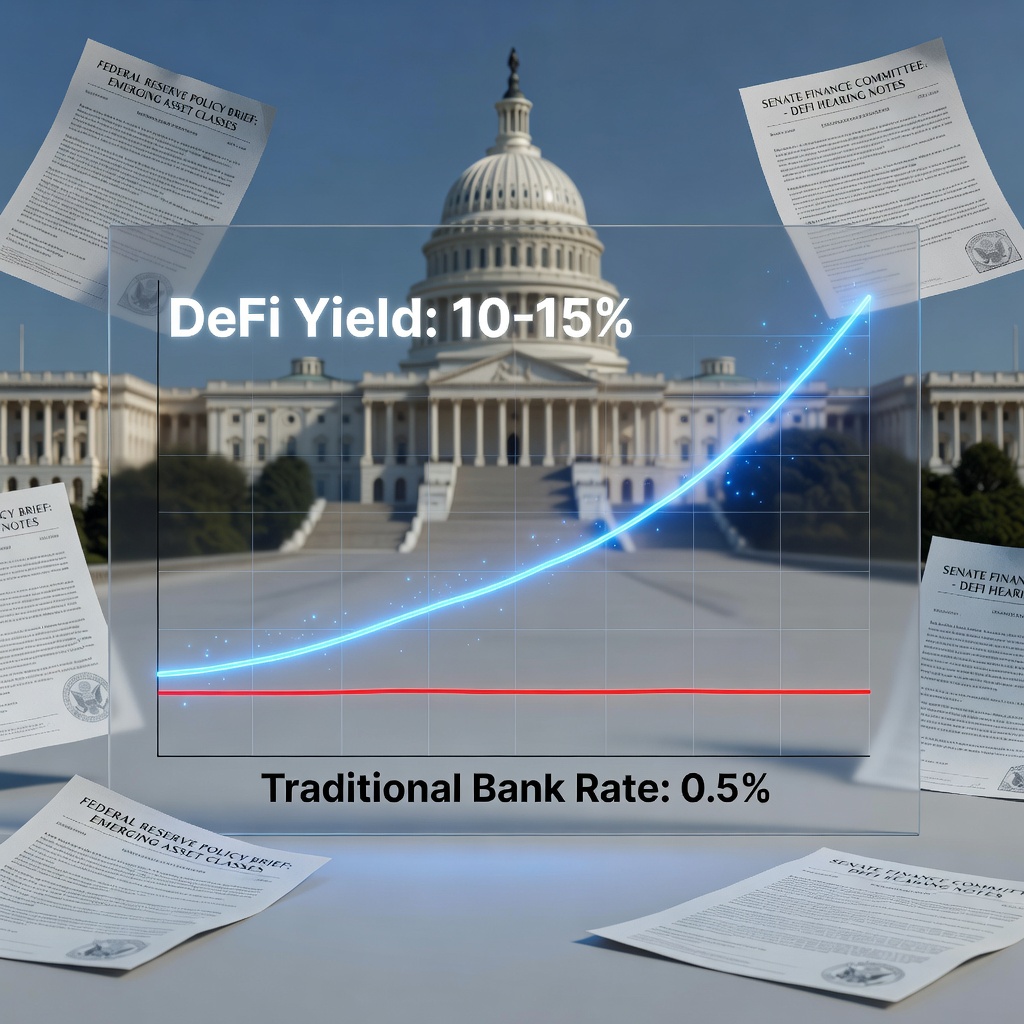
Stablecoin issuers amplify the rout. The Clarity for Payment Stablecoins Act, gaining Senate traction post-election, legitimizes dollar-pegged tokens like USDC and PYUSD without full banking charters. Circle's USDC, minted on Solana and Ethereum, powers 40% of DeFi volume, granting holders instant access to borrow-lend markets yielding up to 15% APY on platforms like Aave. Banks, losers in this ledger, watch deposits hemorrhage as yield tourists flock to on-chain treasuries, eroding their $18 trillion monopoly on savings.
TradFi Custodians: Sidelined Spectators
Big banks, architects of resistance, crumble under the policy onslaught. Goldman Sachs and BNY Mellon, bulwarks of SAB 121 compliance, face capital charges ballooning to 100% on crypto holdings, stifling innovation. Their private blockchain ventures, touted as "permissioned superiority," languish with tokenization volumes under $1 billion quarterly, per industry trackers. Meanwhile, public DeFi vaults like Yearn Finance automate yield optimization, delivering risk-adjusted returns that pulverize custodial wrappers.
Federal Reserve dreams of a central bank digital currency (CBDC) further falter. Trump's vowed executive order halting CBDC pilots underscores privacy perils, dooming programmable money schemes that centralize control. Retail investors, eyeing surveillance-free alternatives, pivot to decentralized identifiers on chains like Polygon, where zero-knowledge proofs cloak transactions from prying eyes. Losers like the New York Fed, architects of the stalled digital dollar, forfeit the narrative to permissionless finance.
"Banks built moats around money; DeFi dynamites them." Anonymous Solana validator, echoing sentiment on X
Platform news underscores the momentum. Coinbase's Base layer-2, now hosting $10 billion in assets, integrates seamless on-ramps for altcoin ETFs, positioning it as the compliant gateway for institutional inflows. Robinhood's tokenized stock offerings on Arbitrum hint at hybrid models, but pure-play DeFi like Uniswap v4 dominates with concentrated liquidity pools boosting capital efficiency by 400%. Young savers deposit ETH derivatives, rehypothecate for leverage, and withdraw fiat yields, all peer-to-peer.

Gen Z Playbook: From Policy to Portfolio
For the target cohort, this regulatory renaissance blueprints self-sovereign wealth. Start with dollar-cost averaging into spot ETH ETFs, now commanding $15 billion AUM post-July approvals, as a beta play on layer-2 scaling. Allocate 20% to Solana ecosystem tokens like JUP or RAY, where governance votes yield airdrops and fee shares. Deploy 30% in liquid staking via platforms like Lido, capturing restaking alpha without lockups.
Entrepreneurship beckons via launchpads like Pump.fun, minting millionaires from viral memes amid policy clarity. Risks persist, chief among them oracle failures or flash crashes, but diversified vaults mitigate with automated rebalancing. Forward projections paint a bull case: Altcoin ETF approvals cascade through 2025, injecting $50 billion fresh capital, per analyst consensus, supercharging DeFi TVL beyond $300 billion.
Banks counter with me-too products, like BlackRock's BUIDL fund hitting $500 million, but these tokenized wrappers still tether to custodial rails, vulnerable to policy whiplash. True winners shun intermediaries, embracing smart contract composability where protocols stack like Lego for bespoke strategies.
Losers' Last Stand and Horizon Scan
Stragglers in the financial old guard muster defenses: heightened KYC mandates or offshore crackdowns. Yet FIT21's decentralized exchange exemptions shield AMMs from broker-dealer tags, fortifying resilience. Internationally, EU's MiCA framework lags U.S. dynamism, herding capital stateside.
By mid-2025, expect XRP and Litecoin ETF verdicts, contingent on Ripple's SEC truce. Gen Z portfolios, unhinged from corporate ladders, compound via these vectors: 40% alts/ETFs, 30% DeFi yield, 20% entrepreneurship tokens, 10% BTC anchor. Banks, reduced to plumbing, concede the yield war, their margins shaved as deposits digitalize.
This policy inflection catapults alternative investments from fringe to fulcrum. Young men forging paths outside DEI gauntlets seize the levers, transmuting code into capital. The ledger flips irrevocably.

Edward Cole
Edward covers crypto and alternative assets with a skeptical, educational lens, translating online hype into clear risks and real opportunities.