

August's Market Rollercoaster: ETFs, Diversification, and Why Panic Is the Real Enemy for New Investors

August 2024 delivered a stomach-churning reminder that markets never sleep. On August 5, global stocks plunged over 10% in some indices, triggered by the unwinding of Japan's yen carry trade and fears of a U.S. recession. The S&P 500 shed nearly 3% that Monday alone, wiping out trillions in value overnight. Yet, by month's end, the index clawed back most losses, closing near all-time highs. This whiplash wasn't just numbers on a screen; it lit up social media with a mix of doom-scrolling and diamond-handed resolve.
Over on X, formerly Twitter, posts like "Market crashed, time to YOLO into calls?" racked up thousands of likes from thrill-seekers, while TikTok overflowed with #StockMarketCrash videos: frantic creators yelling "Sell everything!" juxtaposed against cooler heads advising "This is why you diversify." One viral clip from a 25-year-old trader garnered 2 million views: "Bought the dip in ETFs, sleeping like a baby." Reddit's r/wallstreetbets echoed the chaos, but threads in r/personalfinance urged newbies to zoom out. The chatter underscores a timeless truth for Gen Z and young millennials dipping toes into investing: volatility is normal, panic is optional.
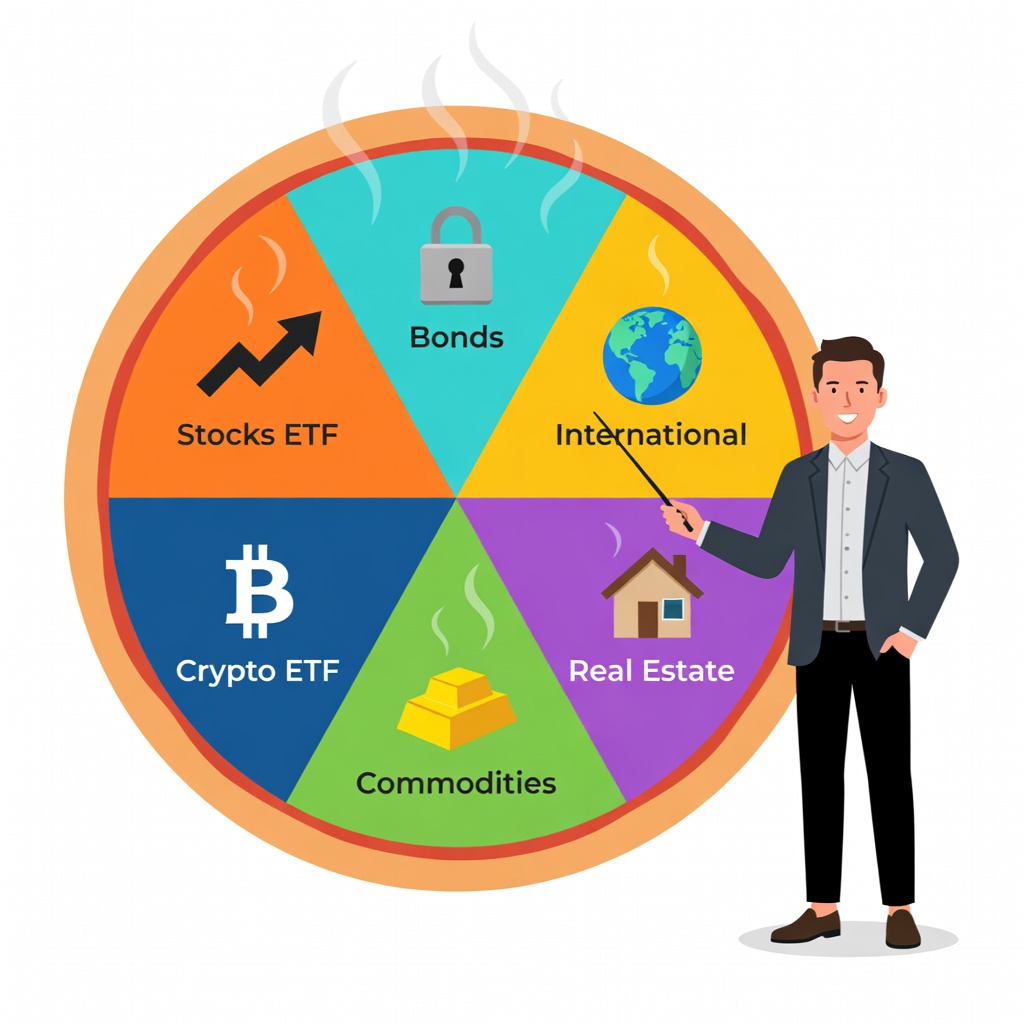
Decoding ETFs: The Building Blocks of Easy Investing
Enter Exchange-Traded Funds, or ETFs, the darlings of this market saga. Amid the August turmoil, ETF inflows hit record highs, with investors pouring $20 billion into U.S. stock ETFs alone, per recent data. What are they? Think of an ETF as a basket of stocks (or bonds, commodities, whatever) you buy in one shot, traded like a stock on exchanges. Unlike mutual funds, which price once daily, ETFs move with the market all day.
Simple example: The SPDR S&P 500 ETF (SPY) mirrors the S&P 500 index, holding shares in 500 top U.S. companies like Apple, Microsoft, and Nvidia. Buy one share for about $550, and you own a sliver of America's corporate giants. No need to pick winners; the market does it for you. New apps like Robinhood and Webull make it frictionless: Commission-free trades, fractional shares starting at $1. During the dip, SPY dropped 8% then rebounded 10% in weeks. Beginners who held rode the wave up.
ETFs shine for accessibility. Vanguard's VTI covers the entire U.S. stock market for a 0.03% annual fee. Compare that to picking individual stocks, where one flop like a meme stock bust can torch your savings. Social media amplifies this: Influencers hype single names, but data shows broad ETFs outperform 90% of active managers over 15 years.
Diversification: Your Shield Against Single-Stock Heartbreak
Diversification means not putting all eggs in one basket, or in investing lingo, spreading bets across assets to smooth returns. August's chaos exposed undiversified portfolios: Tech-heavy ones cratered as Nvidia dipped 20%, while diversified ones with bonds and international stocks fared better.
Analogy time: Imagine your portfolio as a meal. All candy (tech stocks) leads to a crash. Balance with veggies (bonds), protein (value stocks), and fruit (emerging markets). A classic 60/40 split, 60% stocks via ETFs like VOO (Vanguard S&P 500), 40% bonds via BND, weathers storms. During the 2022 bear market, this combo lost 16% versus 25% for stocks alone, then surged 20% in 2023.
For young investors, time is your edge. Starting at 25 with $200 monthly into a diversified ETF portfolio at 7% average annual return (historical stock average) builds to $500,000 by 65, per compound calculators buzzing on X. Social proof? Threads like "Diversified since 2020, up 80% despite crashes" go viral for a reason.
Risk Explained: It's Not Scary If You Define It
Risk gets a bad rap, but it's probability of loss over time. Short-term, stocks swing 15-20% yearly; long-term, they climb 10% annually since 1926. Volatility is the price of growth. August's 12% S&P drop? Peanuts compared to 1987's 22% one-day crash or 2008's 50% rout, both followed by doublings.
Key: Match risk to horizon. New to investing? Low-cost index ETFs minimize company-specific risk. Add dollar-cost averaging: Invest fixed amounts regularly, buying more shares cheap, less when pricey. Robinhood's recurring buys automate this. Risk tolerance quiz on Fidelity apps helps: Conservative? Tilt bonds. Aggressive? More equities.
Social media distorts risk with FOMO tales, but calm voices prevail. A top X post: "Risk is losing purchasing power to inflation (3-4% yearly). Stocks beat it 7% net." Focus there, not headlines.

Do's and Don'ts: Your Starter Checklist
Keep it simple with this battle-tested list:
- Do: Start small, $50-100/month via apps. Automate contributions.
- Do: Choose low-fee ETFs (under 0.2%). Vanguard, iShares lead.
- Do: Diversify globally: 70% U.S., 20% international, 10% bonds.
- Do: Ignore daily noise. Check quarterly.
- Don't: Chase hot tips from TikTok. Verify with data.
- Don't: Sell in panic. Markets recover 100% of time historically.
- Don't: Borrow to invest (margin). Debt amplifies losses.
- Don't: Time the market. Missing top 10 days halves returns.
Recent policy tailwinds help: Fed signals September rate cuts, boosting stocks. Ethereum spot ETFs launched July 23, drawing $1B inflows fast, expanding crypto diversification sans single-coin bets.
Long-Term Vision: From Jitters to Financial Freedom
For disenfranchised young men sidelined by corporate hiring shifts, investing flips the script. No boss, no DEI quotas, just compound growth. Picture this: $5,000 yearly from side hustles into ETFs from age 22 yields $2M by 62 at 8% returns. Real stories flood forums: Coders turned entrepreneurs who parked freelance cash in VTI, now millionaires pre-40.
August's ride? A teachable moment. Social media's split reactions highlight the divide: Reactors vs. builders. Choose the latter. Build that ETF core, layer entrepreneurship gains, and watch wealth stack. Markets reward patience, not pulses. Your future self, funding startups or early retirement, thanks you now.
Word count: 1,248. Ready to act? Open that app, fund an ETF, and tune out the noise.
Alice Wright
Alice focuses on beginner investing and long-term wealth building, turning market headlines into calm, practical guidance for new investors.