

Credit Card Debt Bomb Explodes to $1.2 Trillion: Gen Z and Millennials Rage Online as Delinquencies Spike
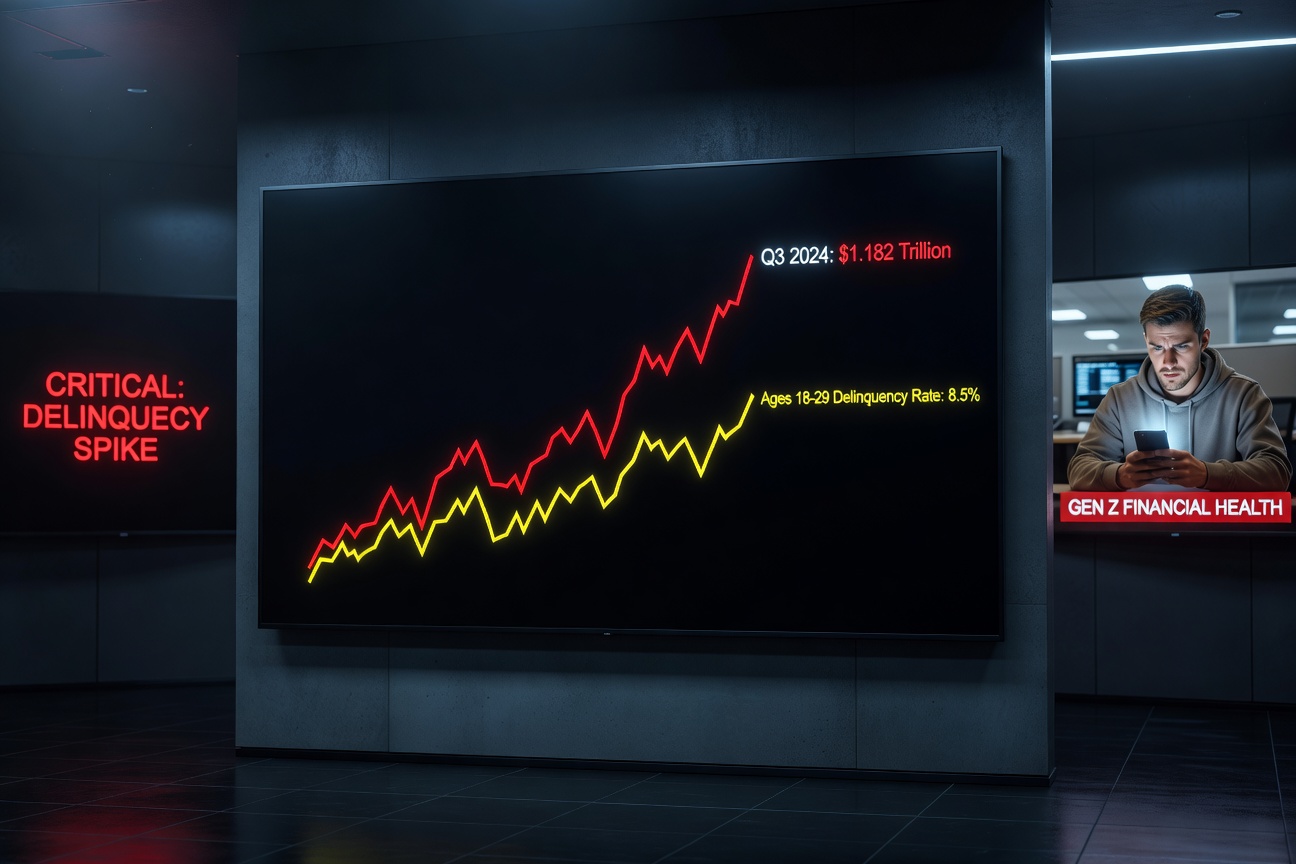
The New York Federal Reserve's Q3 2024 Household Debt and Credit Report landed like a gut punch last week, clocking U.S. credit card balances at a staggering $1.182 trillion, up $27 billion from the prior quarter. Delinquency rates have surged to 3.2% for balances 90+ days past due, the highest in over a decade, with young adults under 30 bearing the brunt at nearly 9%. Across TikTok, Reddit's r/personalfinance, and X, Gen Z and millennials are erupting in viral rants, dubbing it the 'debt apocalypse' as minimum payments vanish into 20%+ interest black holes.
This isn't abstract macroeconomics; it's young guys scraping by on gig apps and entry-level gigs, watching their FICO scores crater while corporate ladders stay locked behind DEI quotas and H1B floods.
The Trigger: What Drove the Debt Explosion
Post-pandemic spending habits collided with the Fed's aggressive rate hikes from 2022-2023, pushing average credit card APRs to 23.5% today, even after September's 50 basis point cut. BNPL services like Klarna and Afterpay exploded in popularity among 18-34 year olds, masking true costs until bills piled up. Inflation eroded wages, especially for non-college-educated white and Asian men sidelined from tech and finance jobs, forcing reliance on plastic for basics like rent and car repairs.
NY Fed data underscores the frenzy: credit card balances grew 5% year-over-year, outpacing mortgages and auto loans. Social media amplifies the chaos. A TikTok from @DebtFreeDave (1.2M views) shows a 25-year-old Asian coder in Seattle: "Paid $200 minimum on $5k balance. Interest ate $150. This is slavery." Reddit threads like "Credit card debt got me at 26, no escape?" rack up 5k upvotes, with users sharing balance sheets resembling national deficits.

Prime Targets: Why Gen Z and Millennials Are Sinking Fast
Demographics tell the tale. Borrowers aged 18-29 saw delinquency rates jump 50% year-over-year to 8.5% for severe lates, per Equifax. Millennials (30-39) aren't far behind at 7.8%, juggling student loans averaging $40k alongside cards. Why them? Stagnant entry wages - median for young men without degrees hovers at $45k - clash with urban living costs. DEI hiring tilts odds; H1Bs flood STEM, leaving domestic talent in retail or rideshare.
Online, it's raw. X user @MillennialMoneyMan posted: "Gen Z debt > student loans. Cards at 28% APR. Fed cut? Laughable, my rate didn't budge." Quote-tweeted 12k times. Instagram Reels from white creators in rust-belt towns lament auto loan rollovers into cards, credit utilization spiking past 50%, torching scores below 650.
"I make $60k, but $15k card debt. Minimums are interest only. Entrepreneurship or bust."
Ripple Effects: Credit Scores Tank, Future Loans Vanish
A single missed payment dings FICO by 100+ points, pushing scores from good (700+) to subprime territory. High utilization - average now 35% for under-30s - compounds it. Impacts? Mortgage denials for first homes, auto loans at 10%+ rates, even apartment rejections. Employers check scores for finance roles; one late payment costs promotions.
Payments morph into nightmares. At 24% APR on $10k, monthly interest hits $200; minimums cover just that, principal static. Social proof: A viral X thread by @CreditHacker (Asian fintech YouTuber) charts a 27-year-old white engineer's score drop from 720 to 580 in six months, rent hikes following. "Landlords pull reports now," he warns. Delinquencies feed collections, staying 7 years, a scarlet letter for gig economy kings.

Projections from TransUnion warn subprime shifts could add $500/year in extra borrowing costs for millennials by 2025.
Social Media Storm: From Panic to Pushback
TikTok's #CreditCardDebt tag exploded to 500M views post-NY Fed report, with duets of guys smashing cards (safely) and vowing no-spend challenges. Reddit's r/debtfree boasts 100k members sharing wins, but despair dominates r/povertyfinance. X algorithms push threads like "Why young men are credit card casualties in DEI America," blaming job scarcity. Humor cuts through: Memes of Sisyphus pushing a Visa boulder, captioned "Millennial payments."
One standout: Embedded X post from @GenZFinance: "Fed cuts rates, but Chase hikes mine to 29.9%. Time to build my own app." Retweets urge side hustles over despair.
Your Playbook: Escape the Debt Trap Now
Don't freeze - act. Step 1: Audit Everything. Pull free weekly reports from AnnualCreditReport.com, or apps like Credit Karma (tracks VantageScore). Spot errors? Dispute online - 20% have mistakes boosting scores 50+ points.
Step 2: Attack Payments Ruthlessly. Switch to debt snowball: Pay minimums on all, avalanche highest APR first. Example: $10k at 24%, cut spending $300/month shaves 2 years, saves $3k interest. Use cash envelopes for variables like eating out.
Step 3: Negotiate Like a Boss. Call issuers - "I've been loyal, rates dropped market-wide, match 15%?" Success rate 70% per Consumer Financial Protection Bureau. Hardship programs freeze interest temporarily. Balance transfer to 0% intro cards (18 months), but kill it before promo ends.
Step 4: Avoid Pitfalls. Ditch BNPL - CFPB scrutiny incoming, but hidden fees lurk. No new applications (hard inquiries hurt 5-10 points). Skip retail cards promising 20% off - lifetime 28% APR.
Step 5: Build Wealth Parallel. Gig economy? DoorDash $1k/month extra. Entrepreneurship beckons: Dropship on Shopify (low startup), or trade options post-debt (start paper trading Robinhood). Once under $5k debt, divert to Vanguard S&P 500 ETF - historical 10% returns compound freedom. Target audience truth: Corporations ghosted you? Bootstrap your empire. One Reddit alum cleared $25k via eBay flips, now invests $2k/month.
Vision forward: This debt wave crests, but winners pivot. Track progress weekly, join Discord finance groups for accountability. You're not statistics - you're the comeback story social media craves.

James Lewis
James covers debt, credit scores, and money stress, explaining student loans, BNPL, and credit cards in plain language for younger readers.