

Tokenized Bonds Breach $6 Billion: Gen Z Yield Chasers Upend Bank Margins, Ignite On-Chain Funding Revolution
When Jake, a 27-year-old software engineer sidelined by endless resume black holes in Silicon Valley's hiring freeze, parked his $50,000 severance into a blockchain-based Treasury fund last month, he didn't just chase yield—he struck at the heart of a creaking financial system. Earning 5.3% APY compounded daily, with redemptions in seconds via USDC, Jake's move mirrored thousands of Gen Z and young millennial peers ditching sub-1% savings accounts. This isn't retail FOMO; it's a calculated business pivot reshaping liquidity flows and corporate balance sheets.
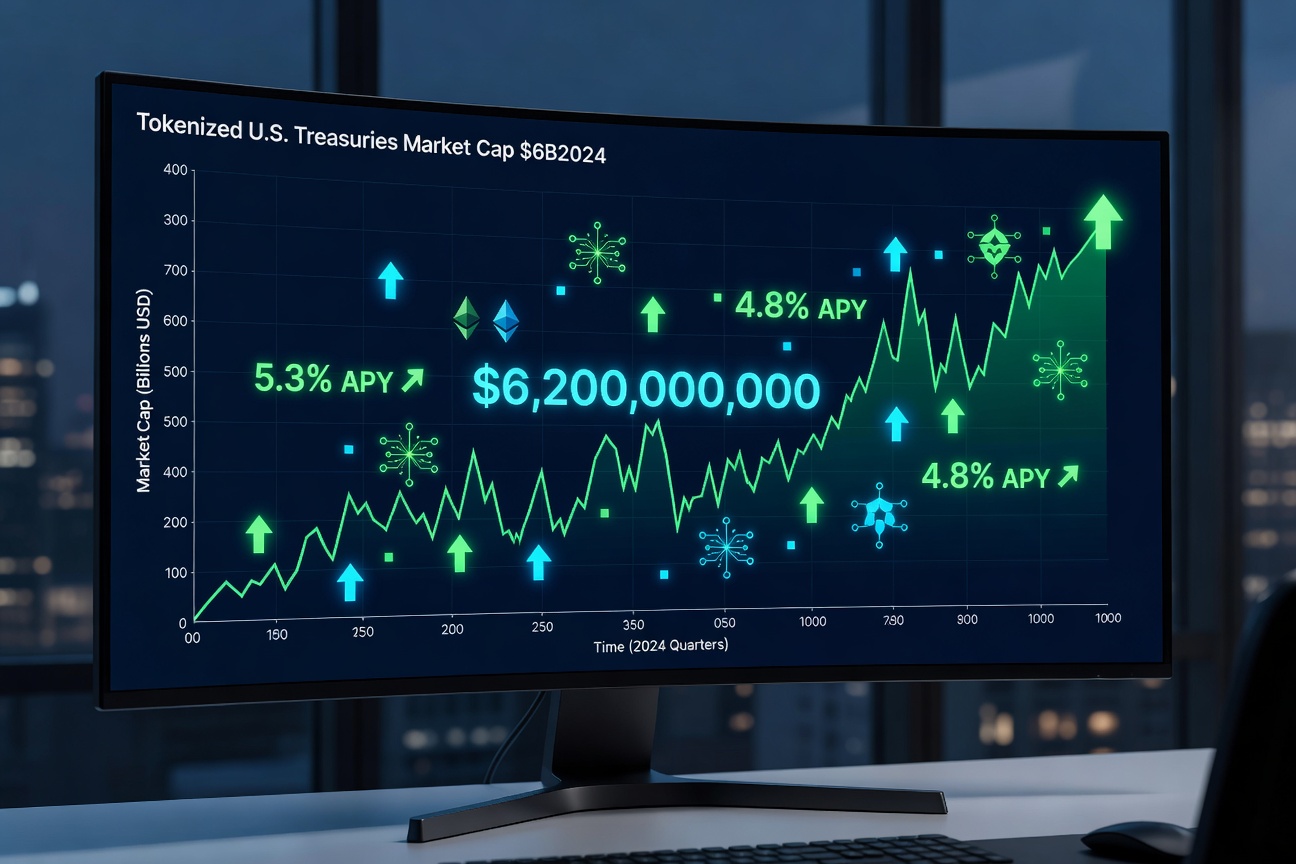
The tokenized real-world assets (RWA) sector, once a niche DeFi experiment, now commands over $6 billion in assets under management, with U.S. government bonds dominating at 70% share. Platforms report weekly inflows exceeding $500 million, signaling a structural shift where digital natives prioritize programmable money over legacy banking inertia.
The Margin Squeeze on Brick-and-Mortar Banks
Banks have long feasted on cheap deposits to fund loans at 4-6% spreads. But as Gen Z—controlling $360 billion in investable assets by some estimates—redirects savings to on-chain yields, deposit flight accelerates. JPMorgan analysts project a $1 trillion shift from traditional accounts to crypto-adjacent products by 2027, compressing net interest margins industry-wide. Regional lenders, already battered by commercial real estate woes, face deposit costs spiking 50 basis points in Q4 alone.
This isn't hyperbole. Franklin Templeton's on-chain money market fund, BENJI, hit $400 million AUM in weeks, offering 5.1% backed by short-term Treasuries. Investors like Jake swap ACH wires for wallet transfers, slashing counterparty risk while earning DeFi-grade composability—lending yields directly into lending protocols for compounded returns north of 7%.

Regulatory Tailwinds Supercharge Market Velocity
Post-election clarity on crypto commodities has unlocked institutional floodgates. The SEC's pivot under new leadership greenlights spot ETFs for assets beyond Bitcoin, while the House-passed stablecoin bill promises federal frameworks by mid-2025. BlackRock's BUIDL fund, tokenized on Ethereum, now integrates with Base layer-2 for sub-cent fees, drawing $2.5 billion since March. Ondo Finance's OUSG product follows suit, with redemptions settling T+0 versus banks' T+2.
Market implications ripple outward: tokenized bonds enhance collateral efficiency in DeFi, where $20 billion in RWAs now underpin lending markets. Borrowing rates drop 1-2% as high-quality Treasuries serve as overcollateralization, fueling a lending boom projected to hit $100 billion TVL by year-end. For young entrepreneurs, this means cheaper working capital—tokenize invoices or IP, pledge for loans at rates banks reserve for blue-chips.
Consider the velocity multiplier. Traditional bonds lock capital for months; tokenized versions trade 24/7 on platforms like Centrifuge, boosting liquidity premiums by 20 basis points. This dynamic pressures high-yield savings providers like Ally or Marcus, whose 4.2% rates pale against on-chain composability.
Entrepreneurial Goldmine: Tokenizing Private Assets
Gen Z's disenfranchisement breeds ingenuity. Bootstrapped founders, shut out from VC gatekeepers, now fractionalize revenue-sharing bonds or equity via protocols like RealT or Maple. A Denver-based logistics startup recently raised $2 million by tokenizing future receivables as RWA bonds yielding 8%, distributed globally without underwriters. Platforms like Goldfinch extend this to emerging markets, but U.S. focus sharpens on domestic plays.
Business economics transform: issuance costs plummet 80% sans intermediaries, while secondary markets ensure exit liquidity. Investors earn senior tranches at 5-6%, juniors at 10%+, democratizing private credit once monopolized by endowments. RWA.xyz data shows private credit tokenization up 300% YoY, with $1.2 billion outstanding—dwarfed by $10 trillion untapped opportunity in SME debt.

Yield Curve Distortions and Macro Ripples
On-chain demand warps Treasury curves subtly. Heavy buying of 3-month bills for tokenization pushes yields down 10bps, per Fed data, while longer durations lag. This front-end suppression aids deficit financing but signals broader disintermediation—why hold bank CDs when wallets yield more with insurance wrappers like Nexus Mutual?
Corporate treasuries adapt swiftly. MicroStrategy's Bitcoin pivot evolves into RWA hybrids; expect Fortune 500s to allocate 5-10% to tokenized funds for yield enhancement. JPMorgan's Onyx blockchain already settles $1 billion daily in tokenized deposits, previewing wholesale migration.
Yet volatility lurks. Smart contract risks, though mitigated by audits, persist; a recent exploit drained $10 million from a minor protocol. Stablecoin depegs, like USDR's blip, underscore redemption chokepoints. Diversify across chains—Ethereum, Solana, Aptos—via aggregators like Marginfi.
Strategic Plays for the Yield-Savvy Generation
For laid-off coders turned solopreneurs, the playbook crystallizes: Allocate 20-30% emergency funds to BUIDL or similar for baseline 5% yields, ladder into private credit for alpha, then tokenize side hustles. Tools like Superform enable cross-chain deployment in clicks.
"Tokenization isn't hype—it's the spreadsheet revolution on steroids, letting anyone run a treasury like BlackRock."
By Q2 2025, expect $20 billion AUM as ETF wrappers launch, blending TradFi familiarity with crypto speed. Banks counter with their own pilots, but youth flight favors innovators. Jake's already parlayed yields into an AI SaaS venture, funding servers sans loans. This is your asymmetry: master RWAs, build empires while banks bleed margins.
Market watchers peg RWA growth at 5x annualized, outpacing DeFi proper. Position now—yields compress as adoption surges, but early movers lock institutional-grade returns.
Edward Cole
Edward covers crypto and alternative assets with a skeptical, educational lens, translating online hype into clear risks and real opportunities.