

Escape the Paycheck Trap: Cash Flow Hacks That Actually Work in This Economy

It's Friday, your direct deposit hits, and for a split second, your bank app looks healthy. By Monday morning, rent notifications, grocery runs, and that unexpected car repair have you scrambling again. If this cycle sounds familiar, you are not alone; millions of young workers battle the same paycheck-to-paycheck grind amid sticky inflation and gig-heavy jobs.
Right now, economic headlines scream warnings: consumer prices up 2.5% year-over-year, tech layoffs hitting 200,000 souls since last year, and credit card debt ballooning to $1.1 trillion. Social media buzzes with raw talks on 'loud budgeting' where folks declare 'no' to pricey nights out, or 'cash stuffing' videos racking up millions of views showing wallets stuffed with bills for bills. These trends are not fluff; they are lifelines for stabilizing cash flow when paychecks wobble.
Why Cash Flow Matters More Than Ever for Your Wallet
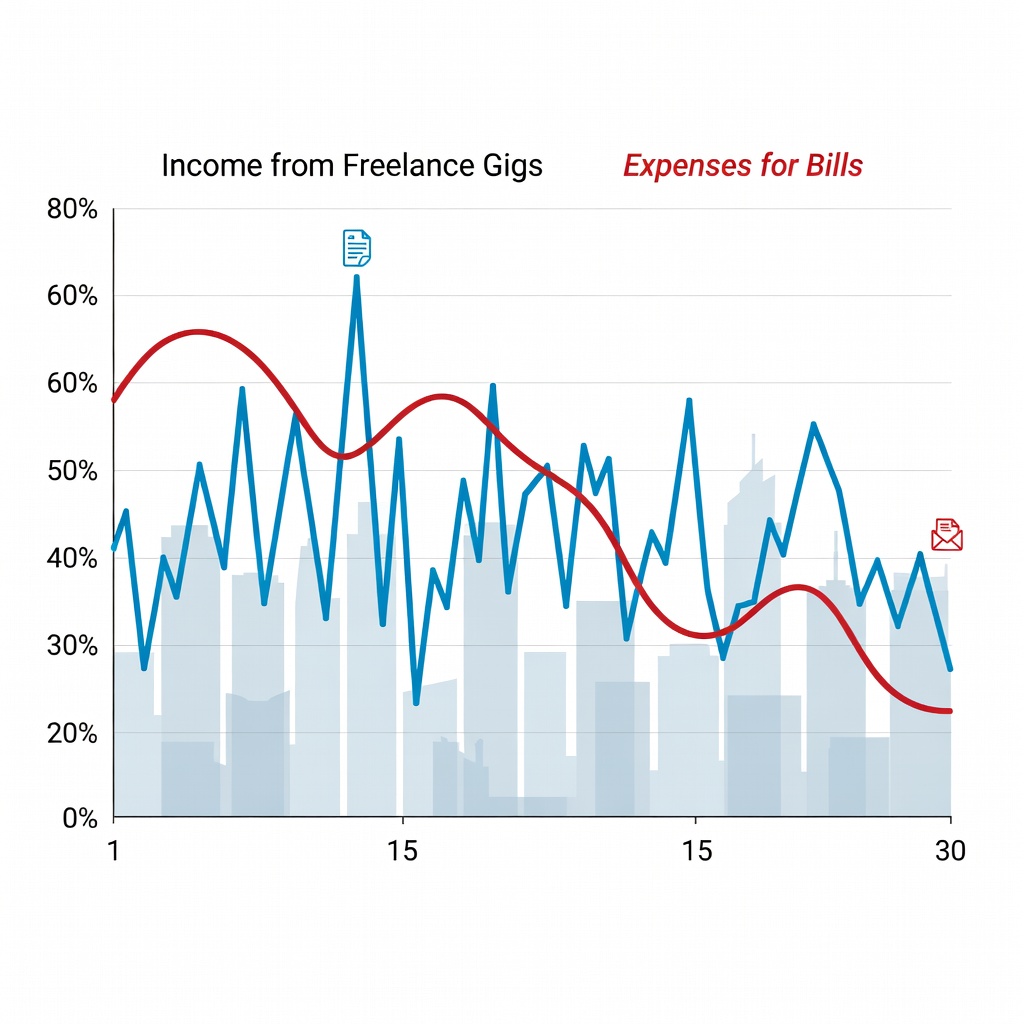
Cash flow is just money in versus money out, timed right so you never hit zero. Traditional budgets fail gig workers or side-hustlers because income jumps around: fat Uber weekends, slim DoorDash nights. Recent news from the Bureau of Labor Statistics shows 36% of Americans freelancing, facing this exact mess. Why care? Poor flow means overdraft fees averaging $35 a pop, stress eating into sleep, and zero progress on dreams like starting a dropshipping store or buying crypto dips.
Social media flips the script. 'Paycheck budgeting' zero-sums every dollar on payday: assign funds to rent, food, fun before impulse buys strike. TikTok's cash stuffing queens (many young women, but guys crushing it too) divvy cash into envelopes labeled 'Groceries: $200.' Touch it for Starbucks? Game over. Loud budgeting? Shout your limits: 'Team, bar tab's on me for waters tonight.' These cut shame, spark community. Fed data backs it; households tracking flow save 20% more monthly.
Step-by-Step: Tame Irregular Income Like a Pro
Step 1: Track last three months. List every income burst (paycheck, tips) and outgo (bills, gas). Apps like Mint or a Google Sheet work; no fancy tools needed. Spot patterns: rent fixed at $1,200 first of month, gigs peak Fridays.
Step 2: Build a 'baseline budget' for lean weeks. Assume lowest income, cover must-haves: housing 30%, food 15%, transport 10%, minimum debts 10%, buffer 5%. Example: $2,000 low month? $600 rent, $300 eats, $200 wheels, $200 cards, $100 safety.
Step 3: Envelope extras. Cash stuff windfalls. Gig $300 Thursday? Stuff 'Fun: $50, Emergency: $100, Invest: $150.' Keeps overflow from vanishing on DoorDash dopamine.
Step 4: Time your bills. Pay rent day one, utilities mid-month. Call providers: 'Can I shift due date?' Many say yes. For irregular bills like car insurance quarterly, divide by three, stuff monthly.
Step 5: Automate wins. Direct deposit splits: 50% needs, 20% wants, 30% future (savings, Roth IRA). Apps like Qapital round up purchases, siphon $5 here, $10 there to a high-yield saver at 5% APY.
Bonus for chaos: 'Rolling buffer.' Stash three days' expenses in a separate account. Hit dry spell? Pull without panic.

Real Life: How Alex Turned Gigs into Gains
Alex, 24, White guy from Ohio, drove Uber full-time after college gig economy boom. Pay: $800-2,500 monthly, wild swings. Bills: $900 rent, $400 food/gas. Old way? Spend big on boom weeks, ramen on busts. Debt climbed to $5k cards.
Pivot: paycheck budgeting post-TikTok scroll. Tracked two months, baseline $1,600. Envelopes: red for rent, green groceries. Loud budgeted with roommates: 'Pizzas out, home brews in.' First month, saved $200. Irregular hack: 'Gig minimum' $50/night guaranteed, rest gravy for invest bucket. Three months later, paid $2k debt, started Shopify side hustle. Now, $3k emergency fund, eyeing real estate wholesaling. 'Feels like boss mode,' he says.
'Cash stuffing killed my impulse buys. Seeing $100 'Fun' dwindle? Instant rethink.'
Viral Challenges to Supercharge Your Flow
Join the wave. 'No Spend November': zero non-essentials 30 days. Track wins on Reddit's r/personalfinance, average $500 saved. '52-Week Challenge': save $1 week one, $52 week 52, totals $1,378 effortless. Cash stuff it themed: Christmas jars fill sneaky.
For entrepreneurs-in-waiting, flow funds dreams. Bank extra $100? Buy Udemy course on Amazon FBA. Consistent flow means scaling: hire VA when gigs hit $5k months. News flash: small biz starts at $0, but poor flow kills 29% first year per Census data.
Twist for our crowd: pair with investing. Budget 10% to Vanguard ETF (VOO tracks S&P, 10% historical returns). Compound $100/month at 25? Hits $164k by 50. Gig life volatile? Flow mastery turns it fuel.
Your Next Move: Start Small, Win Big
Grab a notebook, dump wallet cash into jars tonight. Declare loud budget on X: 'Month of home cooks only.' Watch flow steady, stress drop. Economy tough? Your wallet does not have to be. From paycheck prisoner to cash king, one envelope at a time. Thousands trending it now; your turn builds empire tomorrow.
Pro tip: Review weekly Sundays. Adjust, celebrate $20 saved. Momentum builds wealth.
Emma Clark
Emma writes everyday money guides for Gen Z, focusing on budgeting, saving hacks, and cash-flow basics for readers starting from scratch.