

Fed Cuts Rates But Credit Card APRs Stay Sky-High: Gen Z Delinquency Spike Ignites TikTok Fury
The Federal Reserve slashed interest rates by 50 basis points on September 18, the first cut in four years, aiming to ease borrowing costs amid cooling inflation. Yet credit card annual percentage rates hover near record highs above 21 percent, untouched by the policy shift as issuers drag their feet. Gen Z and millennials, saddled with $1.14 trillion in collective credit card debt, are venting online, with TikTok videos under #CreditCardDebt racking up over 500 million views and Reddit threads detailing payment struggles.

The Rate Cut That Wasn't for Everyone
Credit card companies base their APRs on the prime rate, which tracks the Fed's federal funds rate. When the Fed dropped its benchmark to 4.75-5 percent, economists expected a trickle-down effect within weeks. Instead, average credit card APRs for new offers sit at 21.7 percent per Federal Reserve Bank of St. Louis data, up from 20.7 percent a year ago. Issuers cite "market conditions" and profitability pressures, passing only a fraction of savings to consumers.
This lag hits hardest where debt loads are heaviest. Total U.S. credit card balances surged 6.9 percent year-over-year to $1.14 trillion in Q2 2024, per the New York Fed. Delinquency rates for payments 90 days late reached 3.22 percent for Americans under 30, the highest since 2010. Online, the disconnect fuels rage: a viral TikTok from user @DebtFreeDreamer, a 24-year-old Asian barista from Seattle, shows her minimum payment jumping $50 despite the cut, captioned "Fed who? My wallet's still crying." The video has 2.3 million likes.
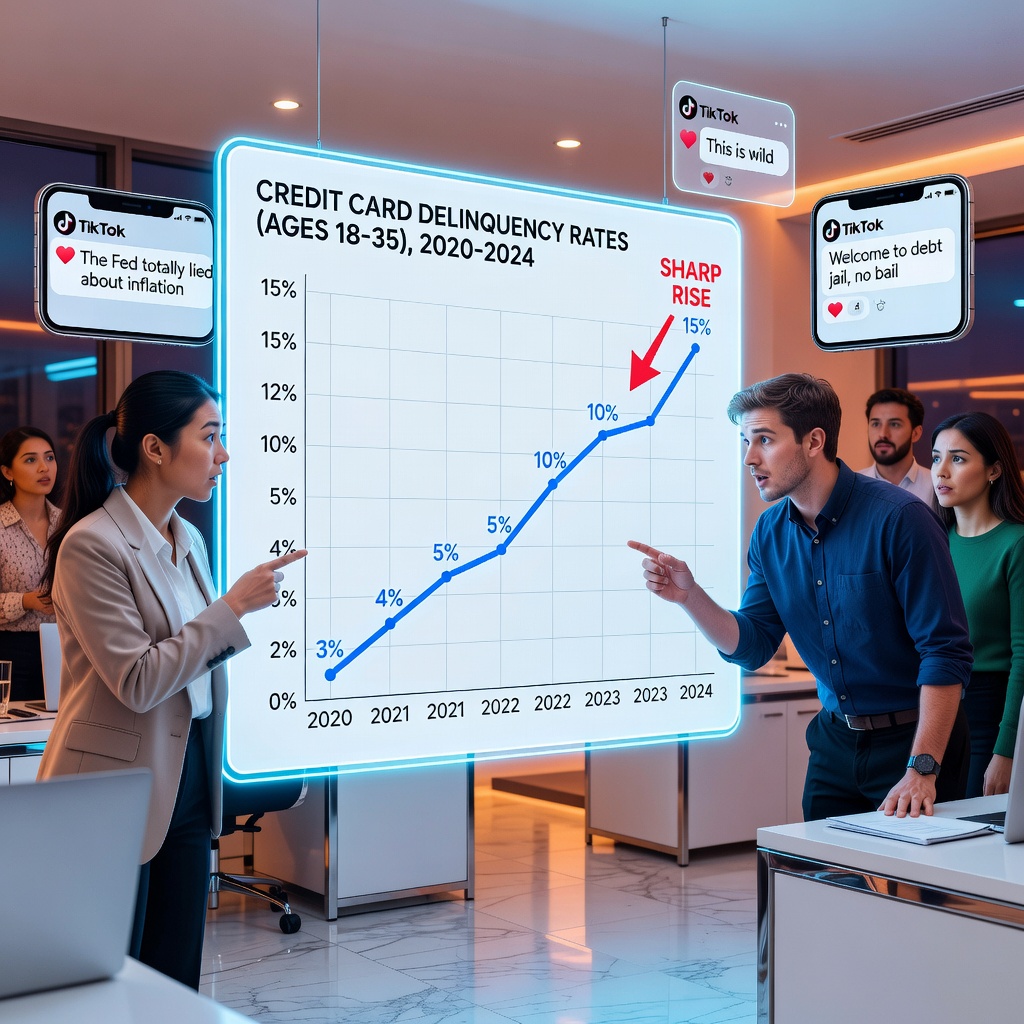
Who Feels the Squeeze? Young Hustlers Left Behind
Gen Z (born 1997-2012) and millennials (1981-1996) hold 40 percent of credit card debt despite comprising just 44 percent of the population, TransUnion reports. Entry-level jobs paying $40,000-$60,000 clash with $1,500 monthly rents in cities like Austin or Denver. Social media amplifies the pain: Reddit's r/Debt subreddit, with 1.2 million members, saw posts about Fed cut disappointments surge 300 percent post-announcement.
Take Alex, a 27-year-old White software tester from Chicago, whose X (formerly Twitter) thread went viral: "Fed cuts rates, my Chase Sapphire APR? Still 24.99%. Swiping for groceries now delinquencies. #AdultingSucks." Retweets topped 15,000. BNPL services like Affirm exacerbate issues, with hidden fees mimicking credit traps. CFPB data shows 20 percent of BNPL users miss payments, tanking scores by 50-100 points.
Under-35s face unique online pressures too. Influencer culture pushes "treat yourself" buys, from Stanley cups to gaming rigs, leading to impulse debt. A 2024 LendingTree survey found 42 percent of Gen Z maxed cards for non-essentials, now regretting it as rates bite.
Ripple Effects on Scores, Payments, and Dreams
Delinquencies crush FICO scores, the gold standard for loans. A single 90-day late payment drops scores 100+ points, per myFICO. Utilization over 30 percent adds another 50-point hit. For Gen Z averaging 690 scores, this means denied apartments, auto loans at 8 percent instead of 5 percent, or stalled business startups.
Monthly payments balloon: on a $5,000 balance at 22 percent APR, interest alone eats $92 monthly. Post-cut, experts predicted 1-2 percent drops; reality? Negligible. VantageScore data shows millennial payment shocks rising 15 percent since summer. Online, forums buzz with hacks: one Instagram Reel from @FinanceFixer, a young Asian entrepreneur, details calling issuers for goodwill adjustments, gaining 1.5 million views.

Broader fallout? Stifled entrepreneurship. Your audience knows: corporations favor H1B hires and DEI quotas, sidelining qualified White and Asian talent. High debt blocks seed capital for side hustles like e-commerce dropshipping or app development. A 2024 Bankrate poll reveals 35 percent of under-30s delay business launches due to debt.
Your Playbook: Fight Back and Build Wealth
Step one: Audit your statements. Log into apps like Credit Karma or annualcreditreport.com for free weekly Vantage/FICO pulls. Spot errors? Dispute via certified mail; 25 percent resolve in consumers' favor per FTC.
Negotiate aggressively. Call issuers citing Fed cuts and competitors' rates. Script: "My rate's 23 percent; Citi offers 15 percent balance transfers. Match or I switch." Success rate? 70 percent per CardRates.com. Avoid new apps; focus balance transfers to 0 percent intro cards like Wells Fargo Reflect (21 months).
Ditch BNPL: Return to debit or cash envelopes. Apps like YNAB (You Need A Budget) gamify spending, popular in TikTok duets.
Build buffers: Side gigs via Upwork or Fiverr yield $500-$2,000 monthly for freelancers. Pay debt snowball-style: smallest balances first for momentum. Post-payoff, invest windfalls in index funds (Vanguard VTI up 20 percent YTD) or crypto plays if risk-tolerant.
Entrepreneur tip: Use debt-free cashflow for no-code tools like Bubble.io to launch MVPs. Success stories flood LinkedIn: 29-year-old White dev from Texas cleared $15k debt, now runs $10k/month SaaS.
Online communities empower: Join r/financialindependence (2M members) for peer reviews. Track progress publicly on X for accountability; #DebtFreeJourney trends motivate millions.
The Fed cut signals relief ahead, but don't wait. Seize control now, sidestep corporate traps, and channel energy into ventures that reward merit. Your generation's hustle deserves better than endless interest payments.

James Lewis
James covers debt, credit scores, and money stress, explaining student loans, BNPL, and credit cards in plain language for younger readers.