

The Algorithm Knows You're Broke: How AI Credit Scoring Is Rewriting the Rules for Gen Z Borrowers

Somewhere in a data center humming with purpose, an algorithm is quietly deciding whether you deserve a mortgage, a car loan, or even a decent credit card interest rate. It has already read your rent payment history, catalogued the timestamps of your online shopping sessions, noted that you transferred $47 to a friend at 2:14 AM last Tuesday, and cross-referenced your zip code with three years of neighborhood economic mobility data. It did all of this in roughly 400 milliseconds. Welcome to the new credit scoring frontier, a technological revolution that promises to unlock prosperity for millions of young Americans who were systematically frozen out by the legacy FICO system, but which simultaneously opens the door to a surveillance apparatus that should make every financially conscious 24-year-old pause and think very carefully before clicking "Accept Terms."
The FICO Trap and Why It Was Rigged Against You
To understand why AI-driven credit assessment feels so seismic to younger borrowers, you first need to appreciate just how deliberately exclusionary the old system was. FICO scores, which still govern roughly 90 percent of major lending decisions in the United States, were architecturally dependent on a borrower having substantial credit history. No credit history meant no score. No score meant no loan. No loan meant no history. The circular trap was elegant in its cruelty, and it hit young Americans hardest. By the time the student loan crisis metastasized into a full-blown generational emergency, millions of Gen Z borrowers were entering adulthood simultaneously carrying federal loan balances averaging over $37,000 while possessing credit profiles so thin they were essentially invisible to traditional lenders.
The pandemic stimulus briefly papered over the cracks. Then the payment pause on federal student loans ended in late 2023, and the resumption of those obligations in 2024 delivered a credit score shock wave. TransUnion data from mid-2024 showed delinquency rates among borrowers under 30 climbing to levels unseen since the 2008 financial crisis. For a generation already navigating $22-per-hour jobs in cities where studios rent for $2,400 a month, even a modest FICO drop of 40 points triggered a cascade: higher auto insurance premiums, rejected rental applications, credit card APR increases arriving like quiet punishments in the mail.
Enter the Machines: Alternative Data and the Promise of a Fairer Score
Fintech lenders and a new generation of AI-native credit platforms sensed the opportunity. Companies like Upstart, Petal, and a growing cohort of well-funded startups began building models that ingest what the industry calls "alternative data." The list is staggering in its breadth. Utility payments. Cell phone bill consistency. Cash flow patterns extracted from bank account data with the borrower's permission. Educational credentials. Even employment trajectory patterns analyzed against macroeconomic mobility datasets.

The early results have been genuinely striking. Upstart has published analysis suggesting its AI model approves roughly 27 percent more borrowers than a traditional scorecard-based model, while simultaneously delivering lower default rates in that expanded approval pool. For a 26-year-old software contractor who has never carried a credit card but has paid his utility bills on time for four years and maintains steady income deposits, the difference between the old world and the new one might literally be the difference between qualifying for a home purchase or renting indefinitely. That is not a trivial human consequence. That is a life trajectory being redrawn by a neural network.
The BNPL sector adds another wrinkle to this evolving picture. Buy Now Pay Later usage among Americans under 35 has exploded, with recent Bankrate survey data suggesting nearly 45 percent of Gen Z consumers used a BNPL product in the past year. The Consumer Financial Protection Bureau finalized rules in 2024 requiring BNPL providers to investigate disputes and issue refunds, bringing the industry closer to parity with traditional credit card regulation. Simultaneously, major credit bureaus began incorporating BNPL payment data into consumer files, which cuts both ways with mathematical precision: consistent on-time BNPL payments can now build credit history, while missed payments can crater scores that borrowers spent years constructing. The technology expanded access, then immediately attached consequences that the old system's exclusion had paradoxically shielded some borrowers from experiencing.
The Surveillance Premium: What You Pay for Convenience
Here is where the technological promise curdles slightly around the edges. Every alternative data point that works in your favor when you are financially healthy can be weaponized against you the moment your circumstances shift. Cash flow underwriting models that reward consistent deposit patterns will flag the month you took three weeks off between jobs. Behavioral analytics that reward "responsible" shopping timestamps will note the period when your spending turned erratic under financial stress. The algorithm does not distinguish between a person experiencing a temporary hardship and a fundamentally irresponsible borrower. It processes signals.
Privacy researchers and consumer advocates have raised alarms about what this data aggregation actually looks like at scale. When a lender accesses your bank account transaction data to underwrite a personal loan, they are not merely checking your balance. They are potentially reading the full ledger of your financial behavior: the subscription services you forgot to cancel, the months when your grocery bill spiked because you were feeding a family member going through a divorce, the period when your gym membership purchase frequency correlated with improved mental health outcomes. None of these data points exist in isolation. Combined, they create a portrait of your life that is arguably more intimate than anything a human loan officer would have dared to request twenty years ago.
Interest Rates, Student Loans, and the 2025 Landscape
Layered beneath the AI revolution is the stubbornly unresolved interest rate environment. The Federal Reserve began cutting rates in late 2024, and markets are watching carefully for further reductions in 2025. But as millions of young borrowers have discovered with considerable frustration, Fed rate cuts do not automatically translate into credit card APR relief. The average credit card interest rate entering 2025 remains historically elevated, hovering near 21 percent for borrowers with good credit and climbing well past 28 percent for subprime profiles. The credit card issuers, using logic that would embarrass a freshman economics student if stated plainly, argue that their cost of capital and risk models justify the spread. What this means practically for a 28-year-old carrying $6,000 in card debt while also resuming student loan payments is a monthly cash drain that makes meaningful wealth accumulation feel like science fiction.

The Biden administration's various attempts to achieve broad student loan cancellation were largely dismantled by the Supreme Court and subsequent legal challenges. The incoming Trump administration has signaled little appetite for federal debt relief, instead emphasizing income-driven repayment reforms and institutional accountability measures targeting universities with poor graduate employment outcomes. Whether those policy levers actually deliver relief to borrowers in the near term remains genuinely uncertain. What is not uncertain is that approximately 43 million Americans with federal student loan balances are navigating a repayment landscape in 2025 that is simultaneously more bureaucratically complex and more financially punishing than anything prior generations faced at the same life stage.
The Practical Playbook: Navigating the Algorithm's World
So what does an intelligent young borrower actually do with all of this information? First, recognize that the algorithmic credit world rewards data generosity combined with behavioral consistency. If a lender offers you a better rate in exchange for linking your bank account and demonstrating twelve months of stable cash flow, that trade may genuinely be worth making, provided you read exactly what data they access and for how long. Second, take BNPL seriously as a credit-building tool, but treat every installment like a credit card payment: late is expensive, and missed is catastrophic. Third, if your FICO score is suffering from student loan delinquency, explore whether your servicer offers rehabilitation programs that can eventually remove negative marks from your credit file. The programs are real, the timelines are long, but the mathematical payoff of a restored score is worth the patience.
Perhaps most importantly, start treating your financial data profile the way a sophisticated investor treats a portfolio. Every on-time payment is a position. Every hard inquiry is a cost. Every new account is both an asset and a liability until managed. The technology has changed the game, rewritten the rules, and introduced new surveillance risks alongside genuine opportunities. The young borrowers who thrive in this environment will be the ones who understand that the algorithm is neither a friend nor an enemy. It is a system, and systems can be learned, gamed in the most legitimate sense of that word, and ultimately beaten by anyone patient and informed enough to play the long game.
The machines are watching. Make sure what they see is exactly the story you want told.
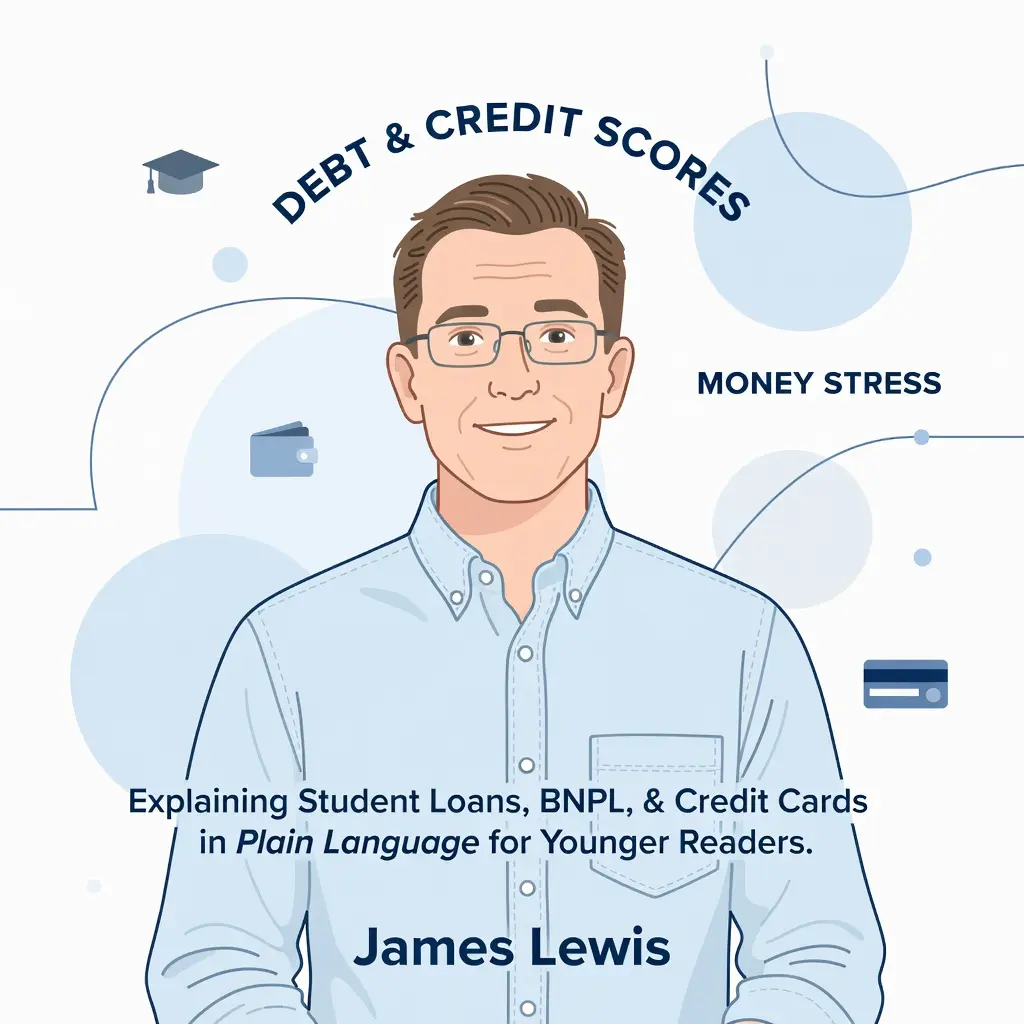
James Lewis
James covers debt, credit scores, and money stress, explaining student loans, BNPL, and credit cards in plain language for younger readers.