

Rent vs Buy: Why Smart Young Guys Are Renting to Build Real Wealth, Not Debt Traps
Imagine scrolling Twitter late at night, cash-strapped after another job rejection thanks to DEI quotas and H1B floods, when a thread explodes: "Rent forever and invest the difference" versus "Buy now or get priced out forever." It's the dilemma ripping through young White and Asian guys' feeds, pitting the "American Dream" house against cold, hard math. With apartment rents down 1.4% year-over-year as of September 2024 per Apartment List data, yet 30-year mortgage rates glued at 6.8%, the buyer's market feels like a rigged casino. But here's the twist savvy entrepreneurs are whispering: renting isn't defeat, it's your launchpad to crush corporate cages through investing and side hustles.

The Latest Numbers: Rents Cool, But Buying Bites Harder
Fresh off Redfin and Zillow reports, U.S. median home prices hit $402,000 in Q3 2024, up 4% from last year, while the national average rent slipped to $1,685 monthly, the first annual drop since 2020. Sunbelt hotspots like Austin (-4%) and Phoenix (-2%) see oversupply from pandemic builds flooding markets. Meanwhile, Freddie Mac pegs 30-year fixed mortgages at 6.81%, double pre-2022 levels, adding $400+ monthly to a typical loan versus renting.
This shift flips the script on social media wars. Threads on r/personalfinance and X explode with charts showing buyer's remorse: a $400k home at 7% interest demands $2,700 principal-plus-interest alone, before taxes, insurance, and 1-2% annual maintenance eating another $500. Renters in the same zip? Often $2,200 total, freeing $500+ monthly. One viral X post from @FinanceBro42 racked 50k likes: "Bought in 2022 at 3%. Now underwater. Renters laughing to the bank with S&P gains." Data backs it: Vanguard shows stock market returns averaging 10% annually long-term, outpacing home appreciation's 4-5% lately.
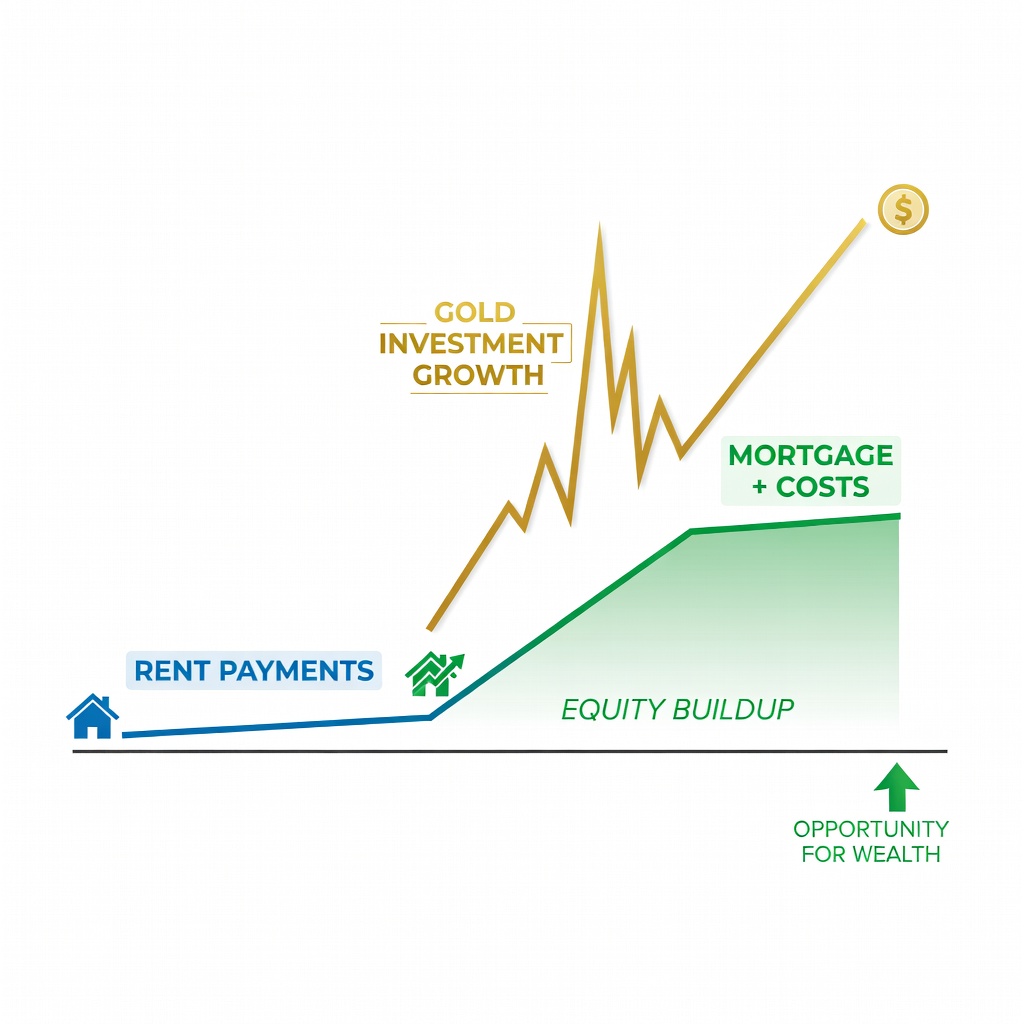
Pros and Cons: Cutting Through the Hype
Renting Wins: Mobility rules for job-hoppers or startup grinders dodging DEI hiring blacklists. No $20k closing costs or 20% down payments tying up capital, better plunked into index funds or e-commerce ventures. Landlord handles repairs, and in cooling markets, negotiate deals or bolt to cheaper burbs. Tax-free flexibility: that saved $600/month compounds to $100k in 10 years at 8% returns, per compound interest calculators.
Renting Risks: No equity buildup, potential rent hikes (though muted now), and building someone else's asset. Emotional hit: society shames "eternal renters" as failures, ignoring how nomads built empires like Airbnb's Brian Chesky, who rented while bootstrapping.
Buying Pros: Forced savings via equity, potential appreciation in stable areas, and mortgage interest deductions (capped but helpful). Stability for families, and if rates drop, refinance windfalls. Psychological anchor: ownership screams success to networks.
Buying Traps: Illiquid fortress drains cash for emergencies or opportunities. High rates amplify payments; Bankrate data shows 40% of recent buyers "house poor," skimping on retirement. Opportunity cost murders: $500 monthly difference invested grows to $200k+ by 40, funding your SaaS exit instead of PMI fees.
X user @EntrepreneurEdge nailed it: "Houses are consumption if leveraged high. Stocks are production." For disenfranchised guys eyeing entrepreneurship, renting aligns with hustle culture over homestead handcuffs.
Scenario 1: Broke Hustler ($60k Income, $1k Monthly Surplus)
You're 25, grinding DoorDash nights while coding an app, fresh off corporate ghosting. Rent a $1,600 1-bed in Atlanta (down 3% YoY). Buy? $250k condo needs $50k down (bye-bye emergency fund) and $1,900 payments. Choice: Rent, bank $300 extra monthly into VTI ETF. In 5 years: $20k portfolio at 9% returns. Use it to launch your dropshipping store. Buying leaves you flipping burgers at 30, equity illusory amid 5% appreciation barely beating inflation.

Scenario 2: Mid-Tier Grinder ($120k Income, $3k Surplus)
32, remote dev post-layoffs, family starting. Phoenix 2-bed rents $2,200. Buy $450k house: 10% down ($45k), $3,100 payments crush lifestyle. Rent instead, invest $900 diff in SCHD dividend aristocrats plus Roth max-out. By 40: $250k nest egg, enough for 20% on a paid-cash condo later. Social proof? Reddit's r/financialindependence swears by this: one user tallied $180k gains renting SF vs buying.
"Rented 7 years, invested delta. Net worth 3x buddy who bought. Freedom > facade."
Scenario 3: Alpha Entrepreneur ($250k+ Income, $8k Surplus)
28, scaled agency to 7-figures, H1B-proof empire. Miami penthouse $4k rent vs $7k mortgage on $1M pad. Rent, deploy $3k monthly to private equity or crypto index. Leverage: use biz credit for real estate later, debt-free. Elon rented launching SpaceX; copy by stacking rentals as tax write-offs via LLC. Projections? $1M invested at 12% (angel deals) hits $5M in a decade, buying trophy properties outright.
The Wealth Hack Angle: Entrepreneurship Over Equity
Forget cookie-cutter advice. Young men sidelined by boardroom biases thrive renting: liquidity fuels courses, networks, prototypes. Data from Upwork shows side hustles averaging $1k/month; pair with rent savings, you're at $100k run rate fast. Historical lens: Post-WWII vets bought cheap; today's 7% rates echo 1980s Volcker hikes, when renters indexed to riches.
Counterarguments? Inflation hedge via homes falters with CPI at 2.5%, stocks crushing 20% YTD. Social media echo chamber pushes FOMO buys; break free. Poll your circle: how many regret 2021 peaks? Run the numbers on NerdWallet calculators yourself.
Bottom line: Renting isn't settling, it's strategic. Channel that frustration into Vanguard accounts, Gumroad launches, angel syndicates. By 35, you're the boss buying on your terms, not begging banks. The house can wait; your empire can't.

Henry Wood
Henry focuses on lifestyle money choices like housing, cars, and travel, helping young readers weigh real-world tradeoffs behind big purchases.