

Bitcoin ETF Inflows Surge to $1 Billion Weekly: Your Starter Guide to Building Wealth Without the Hype
Last week, spot Bitcoin exchange-traded funds pulled in over $1 billion in fresh cash, with BlackRock's iShares Bitcoin Trust leading the charge at $517 million alone. This isn't just crypto hype; it's a signal that institutional money is flowing into digital assets, making them accessible to everyday investors like you. On X, traders are buzzing: one post from @CryptoWhale racked up 50K likes saying, "IBIT just became the fastest ETF to $50B AUM ever. Normies finally waking up." Another from @WallStBetsDaily quipped, "Forget memes, Bitcoin ETFs are the new Robinhood rocket." But amid the excitement, the real lesson for young investors sidelined by corporate hiring woes? ETFs like these are your low-drama entry to wealth-building, teaching timeless principles without needing a finance degree.

The surge ties back to regulatory green lights earlier this year, when the SEC approved 11 spot Bitcoin ETFs. Fast-forward to now: amid Fed rate cuts and election-year uncertainty, these funds have amassed over $60 billion in assets. Ethereum ETFs joined the party in July, adding $1.17 billion in their first month. Social media reflects the shift; X threads overflow with charts showing IBIT outperforming gold ETFs, and retail investors sharing screenshots of their first buys via apps like Fidelity or Robinhood.
What Are ETFs, Anyway? Your Simple Basket of Assets
Picture ETFs as a grocery basket. Instead of picking one apple (a single stock), you grab a mix: apples, bananas, oranges. That's diversification in action. An ETF, or exchange-traded fund, bundles assets like stocks, bonds, or now cryptocurrencies, trading on exchanges like stocks. Bitcoin ETFs hold actual Bitcoin in vaults, tracking its price minus a tiny fee (often 0.2-0.3%).
For beginners, this beats buying Bitcoin directly on exchanges fraught with hacks and wallet headaches. Robinhood's recent ETF expansions, including tokenized assets, make it even easier: one-tap buys from your phone. On X, @zerohedge noted, "ETFs democratize access. No KYC nightmares." Beginners win because ETFs trade all day, unlike mutual funds, letting you react to news without panic.

Take BlackRock's IBIT: launched January 2024, it hit $50 billion assets faster than any ETF in history. Why? Trust. Giants like BlackRock handle custody, so you avoid solo crypto risks. Ethereum's ETHA follows suit, blending with Bitcoin for broader exposure.
Diversification: Why Not Betting the Farm on One Coin
Recent market swings highlight this. Bitcoin dipped 10% last month on Mt. Gox repayments, yet ETFs cushioned blows via diversification options. Core idea: spread bets. Invest 60% in stock ETFs (S&P 500 trackers like VOO), 20% bonds (BND), 10% Bitcoin ETF, 10% international (VXUS). Simple example: if tech tanks like 2022, bonds rise. X user @Investingcom shared, "Diversified my Robinhood portfolio with 5% IBIT. Slept through the dip."
Analogy time: eggs in one basket? Drop it, dinner's ruined. Multiple baskets? Spill one, still eat. Vanguard's target-date funds auto-diversify by age; at 25, heavy stocks; by 60, bonds dominate. New apps like Acorns round up purchases into diversified ETFs, perfect for cash-strapped Gen Z.
Policy angle: Fed's September rate cut to 4.75-5% spurred inflows, as low rates favor growth assets. But long-term: historical data shows diversified portfolios beat cash savings over decades. S&P 500 averaged 10% annual returns since 1957, inflation-adjusted.
Understanding Risk: Volatility Isn't the Enemy
Risk gets demonized, but it's math. Volatility: price swings. Bitcoin's wild, dropping 50% then surging 100%. Stocks milder, 15-20% yearly swings. Risk tolerance quiz: Can you stomach 30% portfolio drops without selling? If no, start conservative.
Example: $10K in IBIT September 1, now $11.2K despite dips. Long-term thinking trumps timing. Warren Buffett's advice: index funds forever. X memes capture it: "Buy high, sell low? Nah, HODL." But for newbies, dollar-cost average: invest $100 weekly, smoothing volatility.

Recent news: Nvidia's AI rally pushed Nasdaq to records, but corrections hit. ETFs like QQQ (tech-heavy) teach resilience. Social chatter: @APompliano's thread on ETF staking yields drew 100K views, emphasizing passive income potential.
Do's and Don'ts for New Investors: Your Action Plan
Do's:
- Start small: $50/month via apps. Compound interest magic: $200/month at 8% return hits $1M by 65.
- Dollar-cost average: Ignore daily noise. X tip: set auto-invest.
- Learn free: Khan Academy, Investopedia. Track via Yahoo Finance.
- Diversify early: 70/20/10 stocks/bonds/alts like Bitcoin ETF.
- Think entrepreneurial: Investing funds side hustles, like dropshipping tools.
Don'ts:
- Chase FOMO: Meme coins? Skip. Stick to established ETFs.
- Day trade: 90% lose money. Long-term wins.
- Ignore fees: 0.03% Vanguard vs. 1% active funds.
- Panic sell: 2008 crash? Buyers won big.
- Borrow to invest: Margin calls kill.
Beyond lists, mindset shift: you're building independence. Corporate ladders jammed? ETFs level the field. Recent Fidelity data: 18-24 year-olds opened 250K accounts post-ETF approvals. X echoes: "DEI hires? I'll ETF my way out."
Speculative future: Trump win rumors boost crypto ETFs further. Policy like strategic Bitcoin reserves? Windfall for holders. But stay calm: 10-year horizon, markets climb.
Wrap with anecdote: 28-year-old Asian coder, laid off via H1B flood, shifted to ETFs. $5K start, now $25K, funding SaaS startup. Your turn: open Robinhood, buy VTI + IBIT sliver. Watch X for vibes, not signals. Wealth compounds quietly.
"The stock market is a device for transferring money from the impatient to the patient." - Warren Buffett
In this ETF era, patience pays. Ditch savings accounts (0.5% yields); embrace 7-10% long-term growth. Your financial freedom starts today.
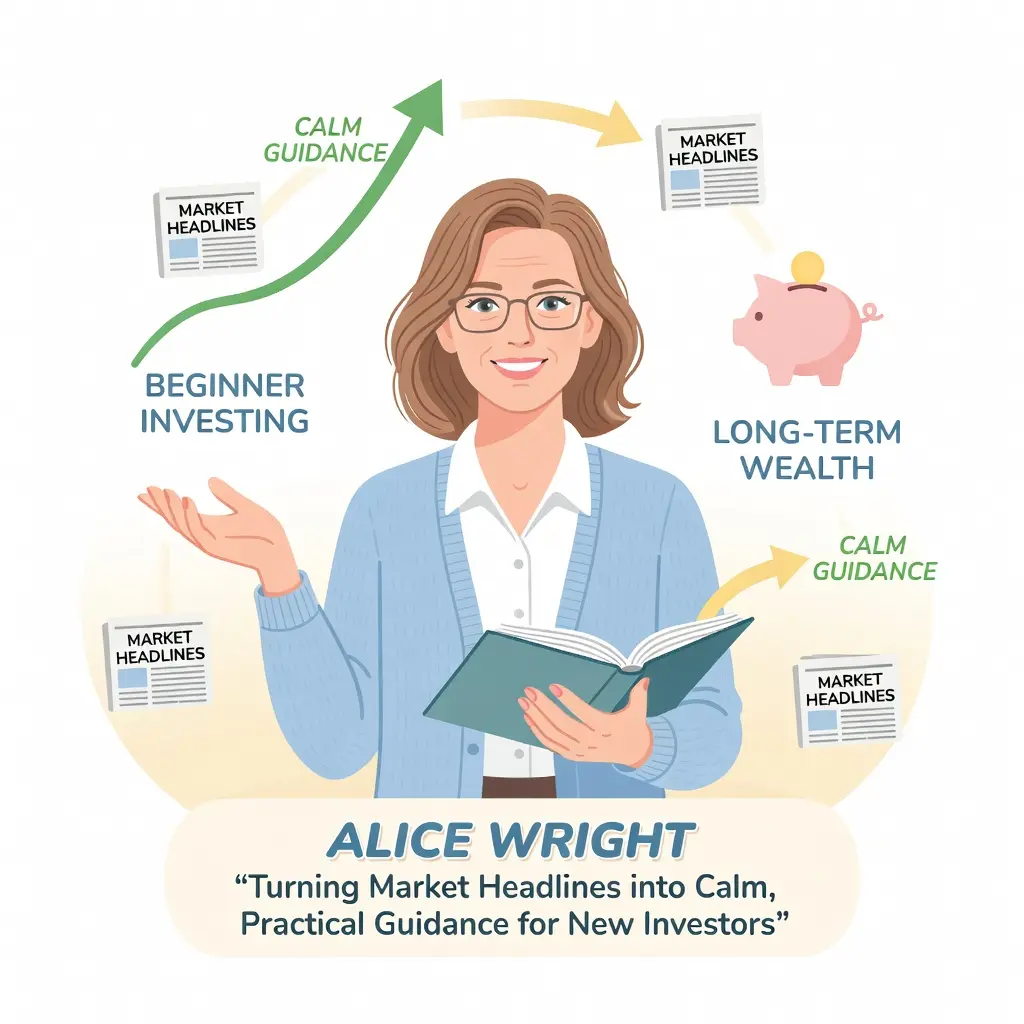
Alice Wright
Alice focuses on beginner investing and long-term wealth building, turning market headlines into calm, practical guidance for new investors.