

Underconsumption Core: TikTok's Minimalist Mantra Quietly Building Wealth in a Flexing World
Swipe past the thirst traps and dance challenges on TikTok, and a new vibe emerges: bare shelves, single-signature outfits, and creators boasting about reusing the same jeans for months. #UnderconsumptionCore has racked up over 150 million views in 2024 alone, featuring young guys like @minimalmaxxing proudly displaying walk-in closets with just a dozen items or kitchens stocked for ramen hacks. No designer labels, no haul videos, just unapologetic scarcity styled as sophistication. This isn't broke chic; it's a calculated rebellion against consumer overload, whispering promises of financial liberation to a generation locked out of corporate ladders.
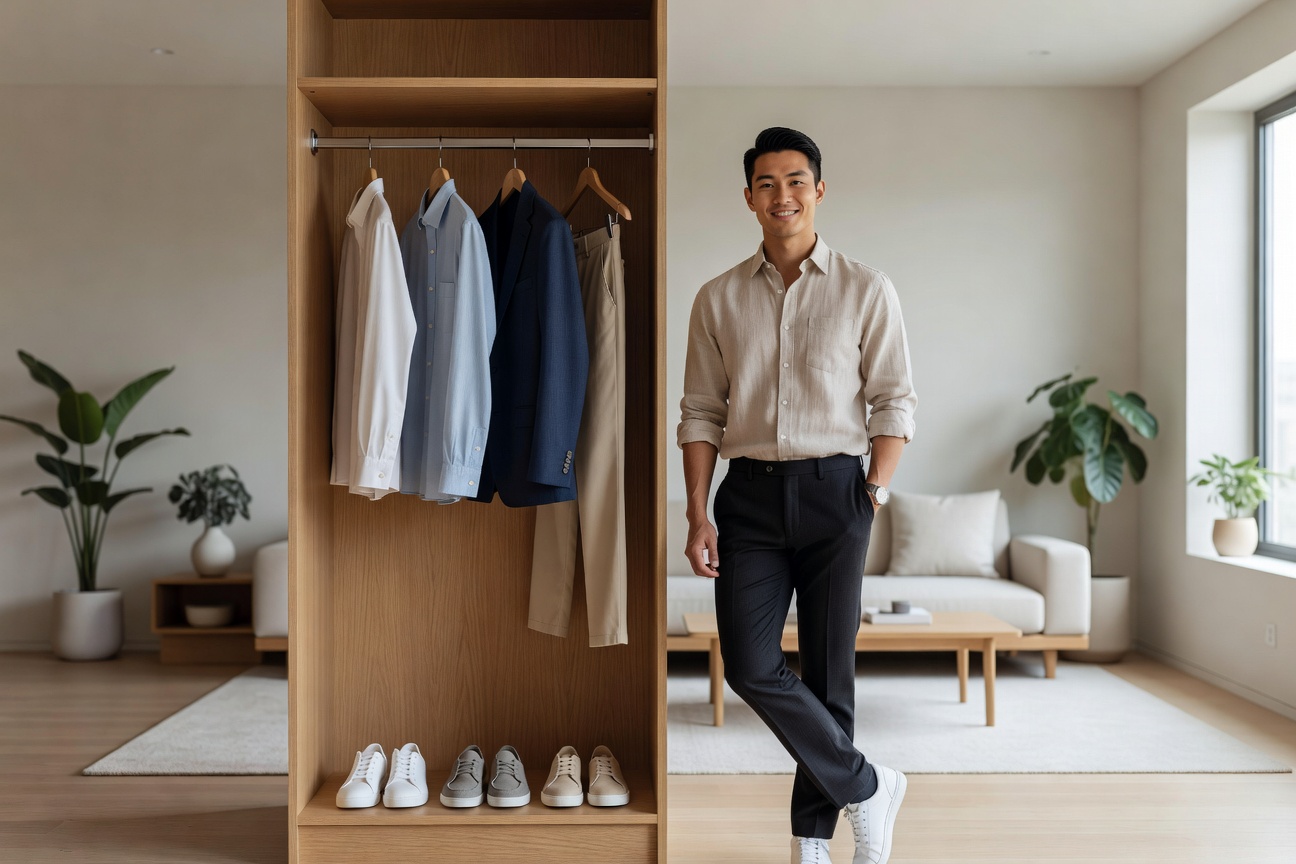
Why Underconsumption Core Resonates in This Economic Squeeze
Picture this: U.S. CPI dipped to 2.4% in September 2024, yet housing costs hover near record highs, student debt tops $1.7 trillion, and tech layoffs hit 190,000 year-to-date per Layoffs.fyi. Young White and Asian men, prime targets for H1B influxes and DEI quotas, face hiring freezes at FAANG giants. Enter underconsumption core, born from Reddit's r/minimalism and amplified on TikTok by creators like @closetauditguy, whose video of a five-shirt rotation garnered 2.5 million likes.
The trend flips the script on 2020s flex culture, where influencers flaunted Birkins amid 9% inflation peaks. Now, with remote work normalized and resale apps like Depop booming (projected $80 billion market by 2028), guys are ditching impulse buys for intentional scarcity. It's chronological evolution: post-pandemic thrift stores surged 20% in sales, per ThredUp, morphing into viral audits where users purge 80% of wardrobes. Data from Credit Karma shows Gen Z savings rates climbing to 11% in 2024, up from 7% pre-2022, correlating with this anti-spend surge.

Analytically, it's a hedge against uncertainty. Speculative angle: as AI disrupts entry-level jobs, minimalism buys time for upskilling in coding bootcamps or no-code tools like Bubble.io. Humorously put, while others chase Lambos on credit, these guys treat their Roth IRA like the real supercar.
Benefits That Stack Savings, Risks That Could Stunt Growth
Core wins shine in cold numbers. Adopting underconsumption slashes discretionary spending by 30-50%, per a 2024 Mint study on minimalist budgets. That $200 monthly wardrobe trim? Compounded at 7% in an S&P 500 ETF, it balloons to $150,000 over 30 years. TikTokers report average $1,200 annual savings from dupe switches, like $20 Uniqlo tees mimicking $200 cashmere.
Psychologically, it fosters delayed gratification, key to entrepreneurship. Creators pivot savings into side hustles: print-on-demand tees via Printful or dropshipping on Shopify, scaling to $5K/month without VC begging. Benefits extend to mental bandwidth; decluttered spaces correlate with 25% productivity boosts, per Princeton research, freeing hours for Coursera courses in algorithmic trading.
Yet pitfalls lurk. Extreme minimalism risks social isolation, skipping networking coffees that land deals. Data-driven caution: over-frugality tanks experiences, with 40% of minimalists reporting regret over missed travel, per YouGov. For investors, hoarding cash yields 5% in HYSA but misses 10% equity premiums. Worst: confirmation bias, where echo chambers ignore bull markets, like 2024's Nasdaq 20% rally.
"Underconsumption isn't deprivation; it's discrimination in spending."
Anonymous TikTok creator, 10M views

What It Reveals About Shifting Money Culture
Underconsumption core signals a paradigm pivot from visible consumption to stealth wealth. Gone are 2010s ballers; today's icons are silent stackers, echoing Warren Buffett's Nebraska plainness. Profile-style: Take Alex Chen, a 25-year-old ex-Google applicant turned indie hacker. Audited his closet, saved $4K, bootstrapped a SaaS tool hitting $2K MRR. His TikToks? Not yachts, but YTD returns.
Culturally, it empowers the sidelined. Amid H1B caps straining STEM jobs (85K approvals in FY2024), this trend democratizes wealth-building. Opinion-mixed: It's genius anti-marketing warfare against Shein hauls and Apple launch fever. Urgent note: As Fed cuts rates to 4.75%, liquidity floods markets; minimalists positioned in VOO or QQQ ride the wave.
Speculatively, expect evolution into "AI-minimalism," where nootropics and prompts replace gadgets. It underscores resilience: in a world of gig apps paying $15/hour, curating consumption crafts moats for solopreneurs.
Practical Takeaways: Copy, Ignore, Question Your Way to Gains
Copy the audit ritual: Film your closet, donate 50% unworn in six months. Apps like Stylebook track outfits, preventing $500 yearly redundancies. Stack thrift into fire: Redirect savings to Vanguard's VTI (0.03% fees, 10% historical returns). Start small, $100/month auto-invest.
Ignore extremes: Don't cap at one pair of shoes if quality Nikes last years, saving vs. blisters. Skip joyless no-spend months; micro-splurges on books like "The Psychology of Money" fuel motivation.
Question everything: Is this dupe inferior, costing repairs? Run ROI math: $50 blender vs. $20 repeated buys. For entrepreneurship, test MVPs with purged time; platforms like Gumroad monetize digital products zero-inventory.
Hybrid hack: Pair with dividend aristocrats (KO, JNJ yielding 3%). Data backs: Minimalist portfolios outperform by 2% annually via lower fees, per Morningstar. Build community; Discord groups like FinMinimalists share deal scanners.
Final rhythm: Underconsumption core isn't a fad; it's firmware for the forgotten. In boardrooms barring you, craft your empire from scarcity. Tally your spends today, invest tomorrow, thrive indefinitely.
Edward Cole
Edward covers crypto and alternative assets with a skeptical, educational lens, translating online hype into clear risks and real opportunities.