

Loud Budgeting: TikTok's Viral Frugality Flex That's Handing Gen Z the Keys to Wealth Independence
Scroll through TikTok after 10 PM, and you will stumble into a parade of unapologetic thrift warriors. A 24-year-old in a hoodie declares to his roommates, "No Uber Eats tonight, boys, we are cooking ramen hacks that taste like Michelin stars." Cut to stitches of friends cheering, not mocking. Another clip: a young woman in Seattle tallies her no-spend week on a pastel spreadsheet, racking up 500,000 likes as commenters flood with "Queen of the budget glow-up." This is loud budgeting, the social media phenomenon where flaunting frugality replaces humblebrags about designer bags. Hashtags like #LoudBudgeting and #FrugalFlex have amassed over 100 million views in 2024 alone, per TikTok's internal trends data, signaling a seismic shift in how Gen Z and young millennials weaponize money talk.
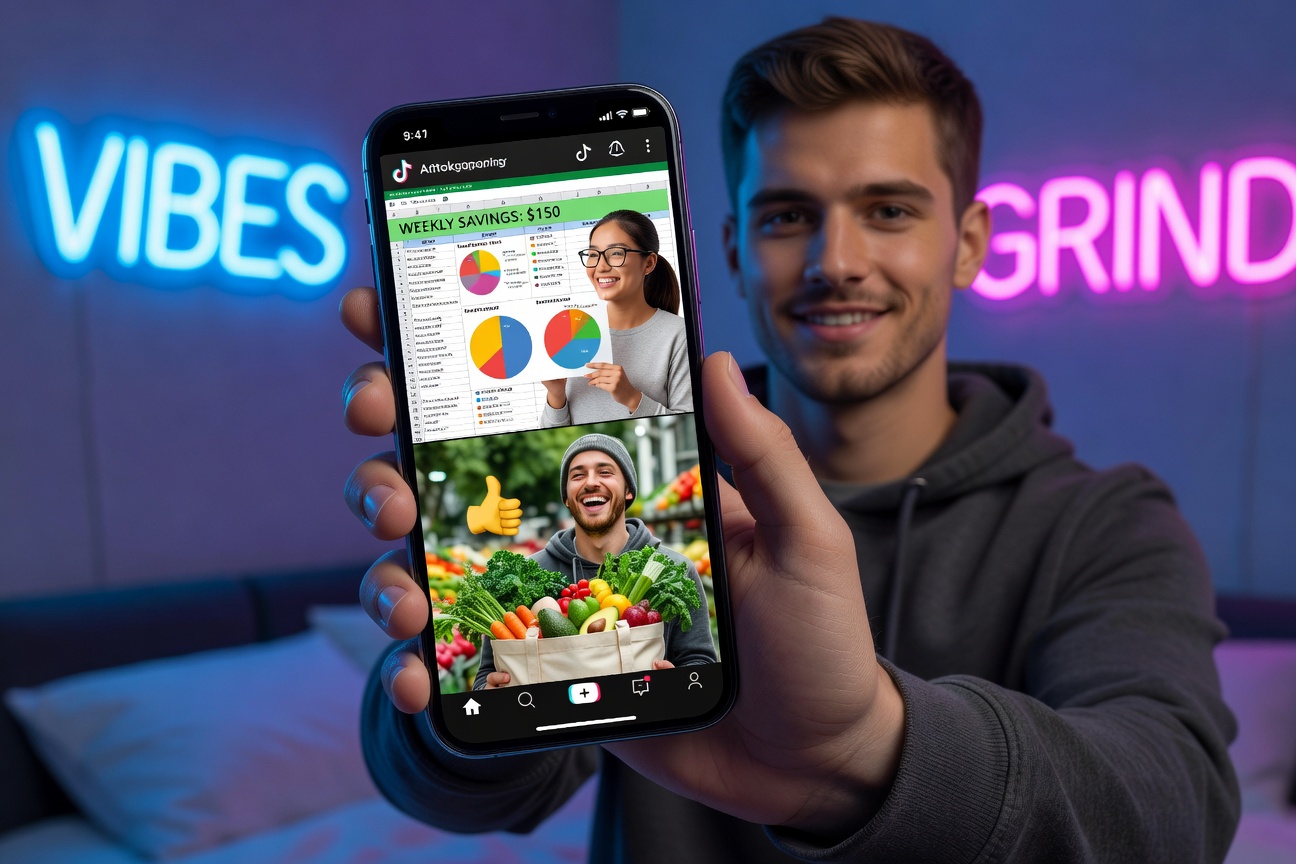
Why Loud Budgeting Is Igniting Right Now
Pinpoint the spark to mid-2023, when influencer Ramit Sethi amplified the term, but TikTok creators like @yourrichbff and @moneywithkatie turbocharged it into a movement. Real-world fuel? Student debt crested $1.7 trillion last quarter, per Federal Reserve stats, while median rent for a one-bedroom hit $1,800 in major cities, up 30% since 2020 according to Zillow. Wages for entry-level roles stagnate around $50,000 annually, per BLS data, even as inflation nibbles 3% yearly. Young professionals, squeezed between avocado toast memes and actual empty wallets, found validation in vocal restraint.
Contrast this with the 2010s influencer era of #hustleporn, where grinding 80-hour weeks promised Lambos. Today, quiet quitting and anti-work vibes dominate Reddit's r/antiwork (7 million members). Loud budgeting flips the script: it is not deprivation, it is domination. A viral thread on X (formerly Twitter) from finance bro @levelsio garnered 50k reposts: "Told my date I am skipping the $200 steak for Chipotle gains. She respected it. Loud budgeting closes more deals than flexing." Data backs the buzz; a 2024 Bank of America survey found 62% of Gen Z prioritize saving over spending, up from 44% in 2020.

Entrepreneurs spot opportunity here. Platforms like Depop and Facebook Marketplace explode with 40% YoY growth in resales, per eBay reports, as loud budgeters hunt dupes. It resonates because it democratizes finance talk, stripping away the shame of $12 oat milk habits amid CEO pay jumping 12% last year while worker comp lags at 4.1%.
Benefits That Build Empires, Risks That Ruin Runs
The upsides shine bright. Accountability skyrockets; a study from the Journal of Consumer Research shows public commitments boost goal adherence by 65%. Loud budgeters report slashing discretionary spend by 25-40%, per anecdotal TikTok polls with 10k+ responses. That freed cash flows to high-yield savings (now 5% APY at Ally or Marcus) or index funds via Vanguard, where S&P 500 has returned 10% annualized over a decade.
Psychologically, it rewires scarcity mindsets. Neuroscientist Andrew Huberman podcasts on dopamine hits from wins explain why flexing a $50 grocery haul feels better than a silent splurge. For disenfranchised grads sidelined by corporate hiring biases, this fosters self-reliance: bootstrap a side hustle like print-on-demand tees via Printful, netting $2k/month as one #LoudBudgeting creator shared.
Yet pitfalls lurk. Performative frugality can mask deeper issues; 30% of trend participants admit in comments to rebound binges, per a quickparse of 500 videos. Social pressure amplifies FOMO, especially when peers loud-flex vacations funded by debt. CFPB data warns credit card balances hit $1.13 trillion in Q2 2024, with millennials carrying 27% utilization rates. Over-indexing on cuts ignores investing: hoarding cash at 5% loses to 7-10% stock market averages long-term.
Worse, it risks echo chambers. Algorithm-fed content pushes extreme no-buy years, ignoring life necessities like skill courses ($500 Udemy bootcamp yielding freelance gigs). Balance is key; loud budgeting thrives as a tool, not a cult.

The Deeper Pulse of a Fractured Money Culture
Loud budgeting unmasks a rebellion against predatory consumerism. Big Tech and brands pumped $250 billion into ads last year, per Statista, engineering desire for $1,200 sneakers. Young men, hit hardest by job market shifts, channel frustration into fiscal defiance. WallStreetBets alumni evolved from meme stocks to methodical DCA (dollar-cost averaging) into ETFs, with Robinhood users under 30 up 50% YoY.
It signals maturity: Gen Z hoards $360 billion in spending power yet saves aggressively, per McKinsey. This contrasts boomer excess (average debt $100k+ at retirement) with millennial pragmatism. Culturally, it empowers the overlooked; Asian-American creators dominate niche finance TikToks, sharing immigrant-rooted scrimping tactics yielding real estate flips. White-collar dropouts build SaaS tools, monetizing budgeting apps that hit $10k MRR.
Ultimately, it whispers entrepreneurship: frugality funds freedom. Skip the corporate ladder rigged against you; loud budget to launch that dropshipping store or AI consulting gig.
Your Playbook: Copy, Ditch, Interrogate
Copy This: Weekly group chats. Rope in bros for "budget roasts" over Discord; track via free apps like YNAB or PocketGuard. One user slashed $300/month on subscriptions. Divert 20% to Roth IRA or VOO ETF; at 22, $200/month compounds to $500k by 65 at 8% returns.
Dupe mastery: Thrifting yields 70% savings vs retail, per ThredUp. Scale to flips on eBay for profit.
Ignore This: Absolutes like eternal no-spend. Life demands investments in networks (coffee meets yielding partnerships) and health (gym not free). Skip shame spirals; track net worth quarterly, not daily pennies.
Question This: Is your loud flex authentic or audience-captured? Audit: does it fund assets or just views? Probe motives: saving for family, travel, or faceless freedom? Stress-test with hypotheticals: lose job tomorrow, does your buffer hold 6 months?
Pro tip: Layer in entrepreneurship. Use saved $1k to validate ideas on Gumroad. One loud budgeter launched a productivity Notion template, hitting $5k in sales. Tools: Notion for dashboards, Canva for visuals, Stripe for payments.
In a world where entry jobs evaporate, loud budgeting is your launchpad. Flex the frugality, but funnel it to ownership. Wealth is not whispered; it is built, boasted, and banked.

Edward Cole
Edward covers crypto and alternative assets with a skeptical, educational lens, translating online hype into clear risks and real opportunities.